
To achieve the vision of a Belfast world-class waterfront through strong community, heritage and natural assets, and economic growth, a set of parameters for design development along the waterfront promenade is needed. To support the promenade and the Maritime Mile to develop as a destination in its own right, design decisions must underpin that the public realm is:
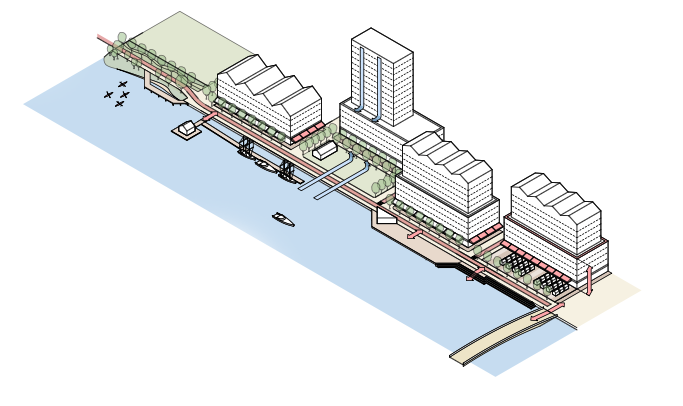
An urban waterfront promenade is more than just the area of public realm. Often narrow, it is shaped by it neighbours: the buildings and the water that border and support it. The Belfast promenade will connect many neighbourhoods, presenting varied challenges and requiring diverse solutions. As such, we consider five areas of design intervention with equal importance:
The population of Belfast is 345,418. The city also welcomes 1,459,760 tourists annually, while visitor numbers to Titanic Belfast reached 800,000 pre-pandemic. The waterfront is therefore an important asset for the city — both as an amenity for residents and as a key component of the wider Belfast tourist experience.
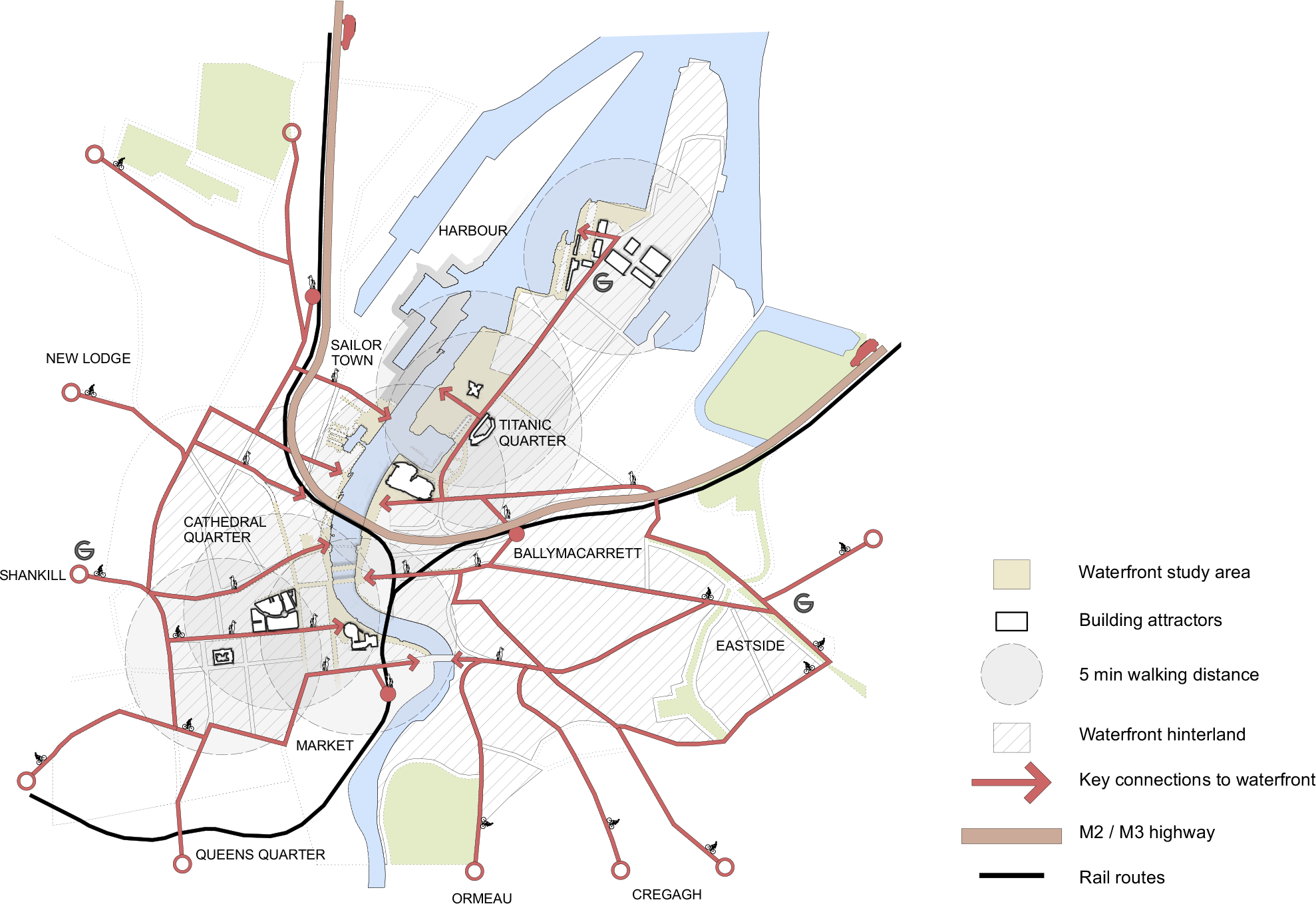
The strategy must focus on reconnecting the waterfront with the city centre and the surrounding residential areas to the south, east, and west. Transit networks must also be reviewed from a post-COVID perspective.
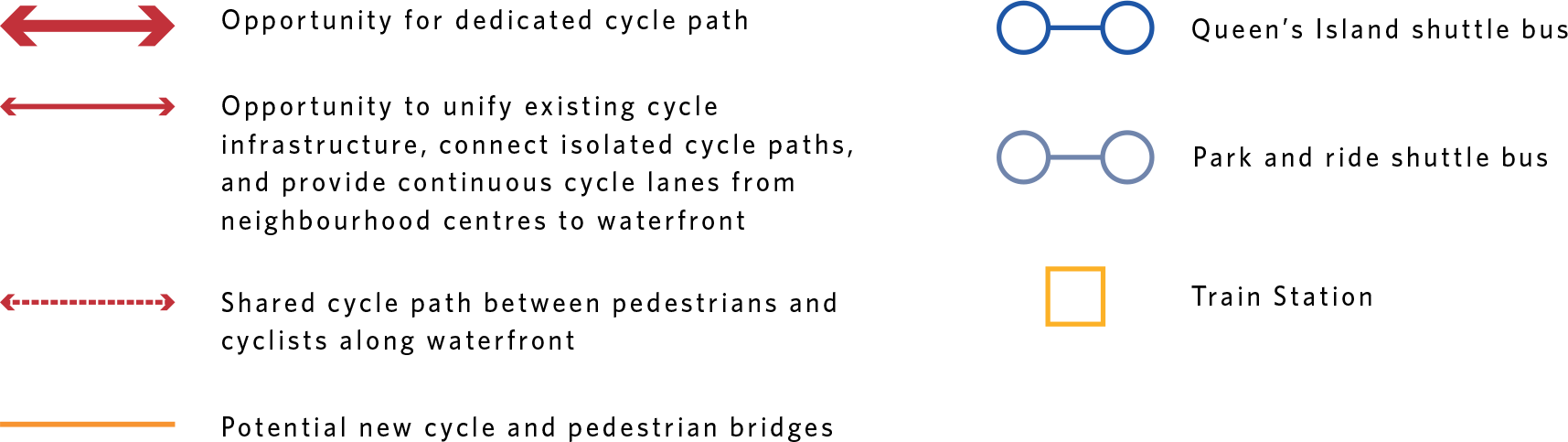
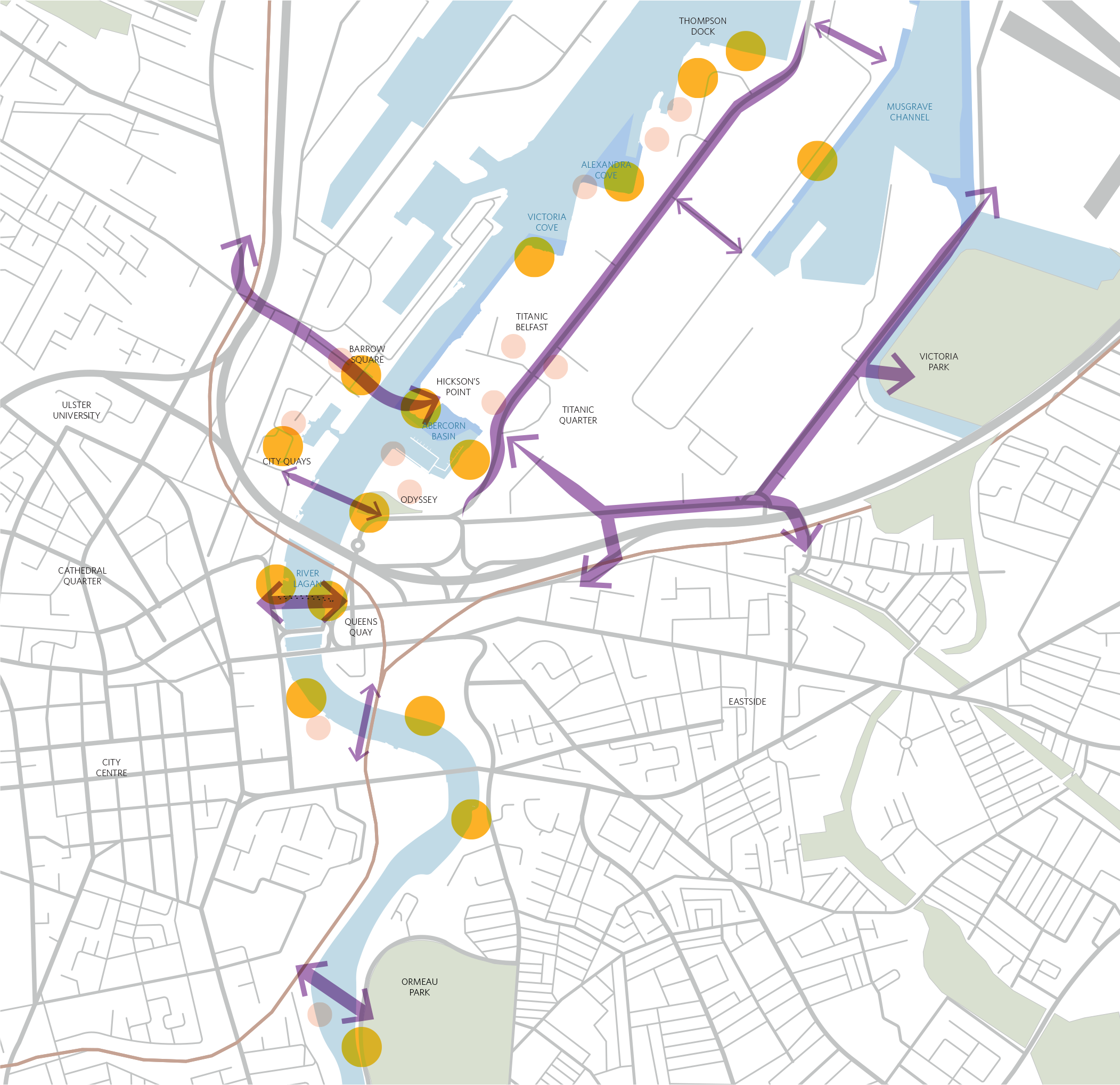
Future connection routes outlined in the Queen’s Island Transport Plan 2035 and the DfI Belfast Cycling Delivery Plan 2022–2031 include the addition of the promenade and new bridge connections. These will further enhance connectivity and promote active travel.
The DfI acknowledges that, at peak times, Belfast’s road network is already at or over capacity. New bridge connections across the river will be vital in linking destinations on the west side — such as Yorkgate Station and Sailortown — to attractions and new development in Titanic Quarter and beyond.
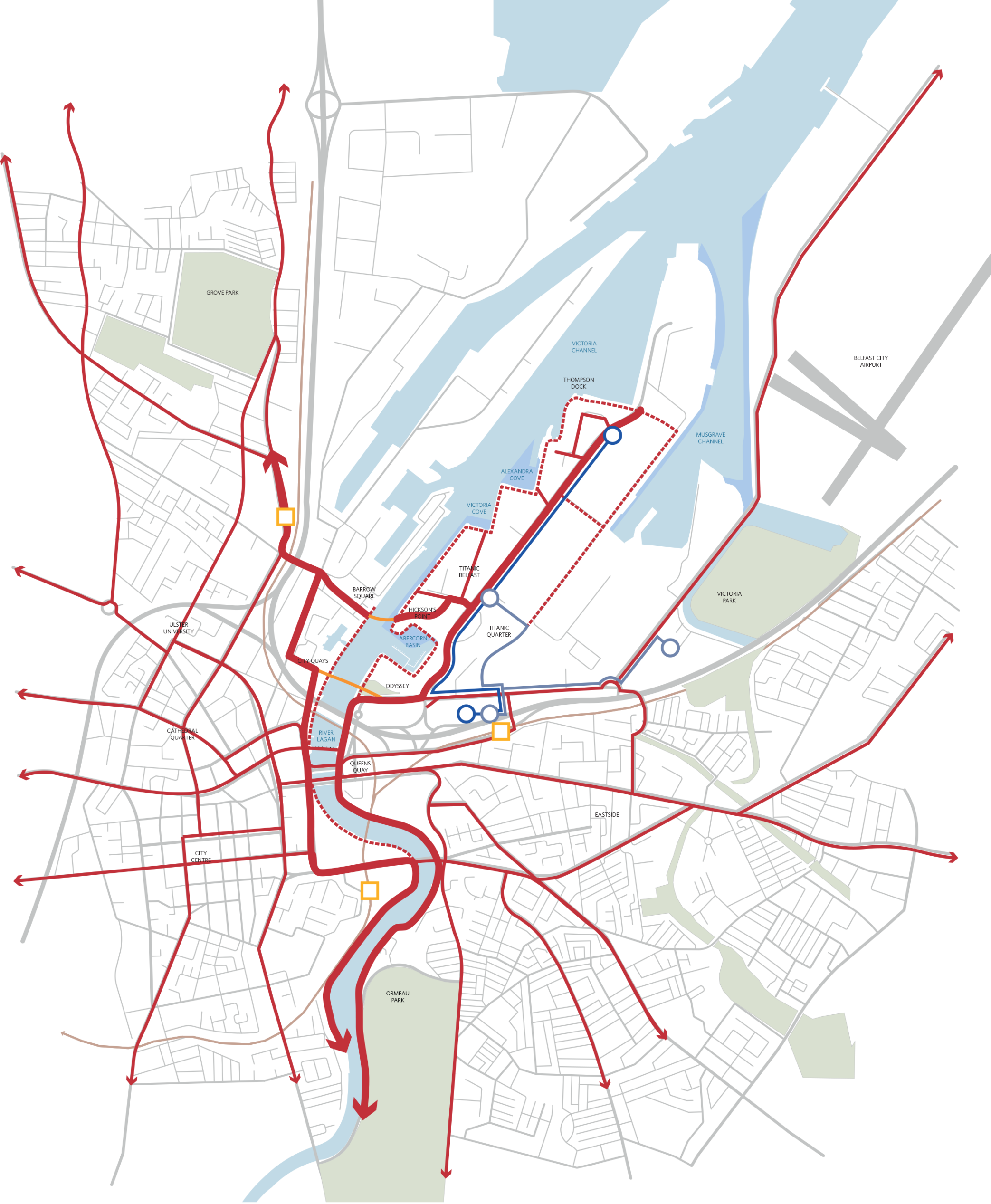
A dozen great public realm destinations along a
connected, quality waterfront promenade.

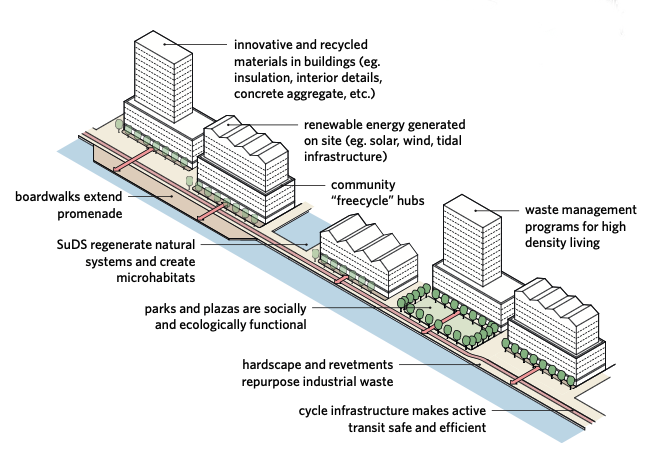
The Belfast Waterfront holds a key to delivering the city’s goals to move towards a net-zero-city over time. Specifically, the waterfront can help reduce existing lifestyle-carbon by:
The focus on the type and quality of development of residential and commercial space further can help to deliver the circular economy goals of Northern Ireland by:
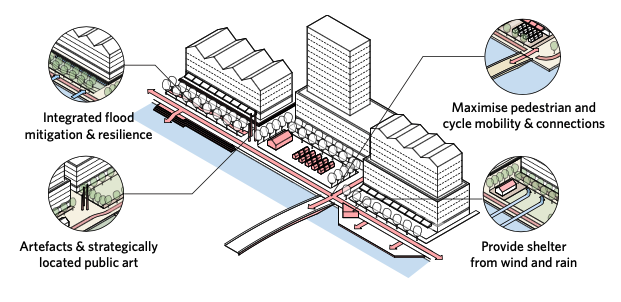
The experience along the waterfront promenade should be coherent but varied. Consistency in pedestrian and cycle paths, signage and wayfinding, and furniture signals a public space is for everyone. Site specific artefacts, storytelling, heritage, art, and shelters can help create bespoke destinations and a sense of place. It is crucial that flood mitigation and environmental resilience are integrated into the design of the public realm.
Whether in the tidal estuary or up-river from the weir, the River Lagan is a magnificent asset and presents many opportunities. Access to water-based transport for commuting, tourism and recreation greatly expands the public realm. The water’s edge must provide the infrastructure to support a wide range of activities along a shoreline engineered to provide crucial ecosystem services.
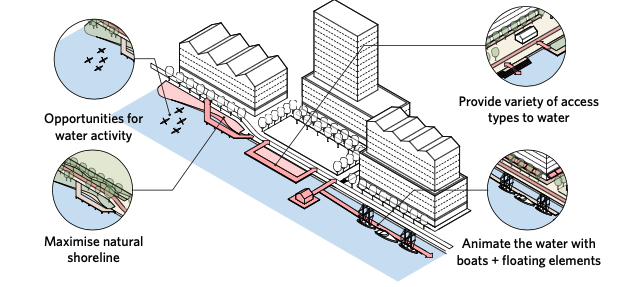
Buildings play a crucial role in defining the waterfront promenade, and therefore must be activated, proportional and welcoming. Structures affect both the human experience of a place and the immediate microclimate. Wind and deep shadows should be mitigated and building shoulders can be used to create the illusion of a lower roofline such that the promenade is both physically and subconsciously welcoming.

The experience along the waterfront promenade should be coherent but varied. Consistency in pedestrian and cycle paths, signage and wayfinding, and furniture signals a public space is for everyone. Site specific artefacts, storytelling, heritage, art, and shelters can help create bespoke destinations and a sense of place. It is crucial that flood mitigation and environmental resilience are integrated into the design of the public realm.
Interventions in the public realm, water’s edge and buildings must be considered with equal importance.
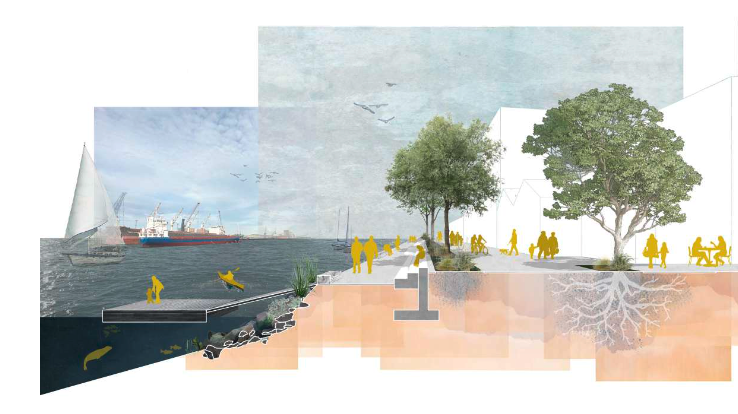
Environmental engineered shorelines embrace ecosystem services and create access to the water fostering a sense of connection and responsibility.
A split-level promenade creates shared space for active travel while integrating seating and flood defence.
A sustainable drainage system with connected soil creates a resilient network of street trees and native planting that filters stormwater, increases habitat, and creates a welcoming environment.
Varied building heights with setbacks create a more comfortable public realm where ground level businesses can spill out and animate the public realm.